Municipality of Tourist Interest

Animals of the Brazilian Fauna
Maned wolf
Nome Científico
Ouça a apresentação do animal:
Nome Científico
Chrysocyon brachyurus
Características
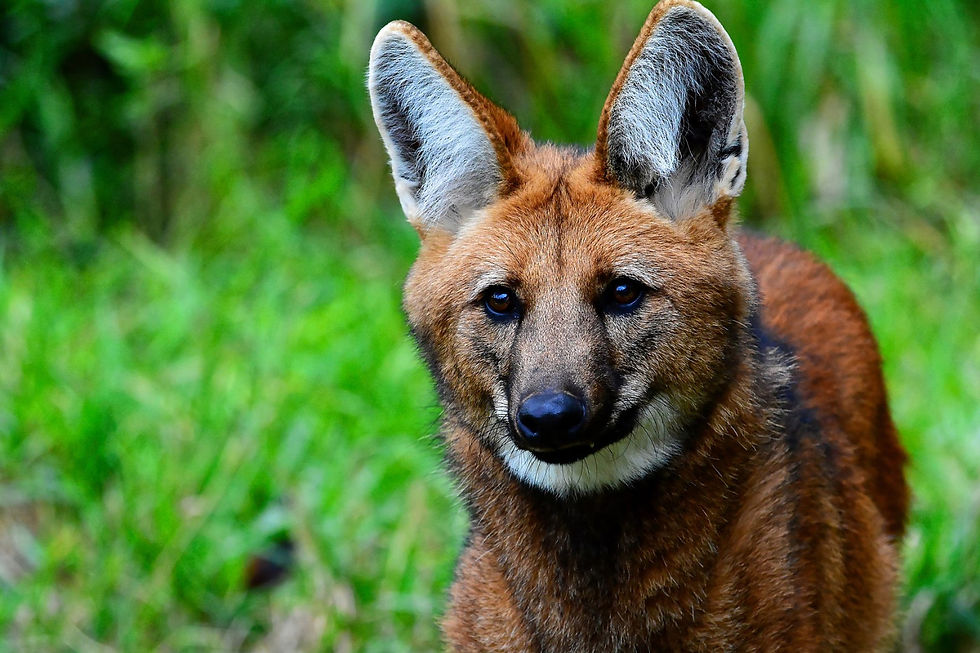
The maned wolf is the largest canid in South America, with long, thin legs that help it move across open fields. It has a dense, reddish coat, large ears, and a narrow snout. It can weigh between 20 and 30 kg and measure up to 1 meter in height.
Ocorrência
Primarily inhabiting the Brazilian Cerrado, the maned wolf is also found in parts of Paraguay, Argentina, and Bolivia. It prefers open fields, pastures, and areas with low vegetation.
Comportamento
The maned wolf is a solitary and crepuscular animal, being most active at dawn and dusk. It marks its territory with urine, which has a strong odor. It does not form packs like other wolves, and is generally seen alone or in pairs during the mating season.
Alimentação
It has an omnivorous diet, consisting of fruits, small mammals, birds, reptiles, and insects. The wolfberry, a species of Solanum, is an important part of its diet and helps control worm infestations.
Reprodução
The breeding season occurs between April and June, with a gestation period of approximately 65 days. The female gives birth to 1 to 5 pups, which are cared for by both parents. The young remain with their parents for about a year.
Preservação
The maned wolf is considered vulnerable, mainly due to habitat loss, roadkill, and diseases transmitted by domestic dogs. Conservation programs focus on protecting the Cerrado biome and educating people about the importance of the species.
Curiosidades
Despite its name, the maned wolf is not a true wolf and is not closely related to wolves in the northern hemisphere.
It is known for the peculiar sound of its barks, which resemble a hoarse cry.